Researchers at the University of Adelaide bypassed a long-standing limitation in superconducting quantum interference devices, or SQUIDs, by strategically replacing key components with simple “bare loops”, superconducting loops without Josephson junctions. This innovation creates a “synthetic area spread” allowing the sensor to behave as if it contains many differently sized loops, without the need to fabricate them.
SQUID Performance Limited by Zero-Field Identification
The Adelaide team’s solution to SQUID accuracy challenges bypasses the need for fabricating an extensive range of superconducting loop sizes, a historically complex undertaking. Previously, engineers addressed the problem of zero-field identification by constructing circuits with hundreds or even thousands of differently sized loops to achieve accurate readings, a method that inherently reduced the device’s sensitivity. The new approach avoids this trade-off. By strategically incorporating “bare loops”, superconducting loops lacking Josephson junctions, the researchers created a circuit that mimics the effect of varied loop sizes without the manufacturing complexity.
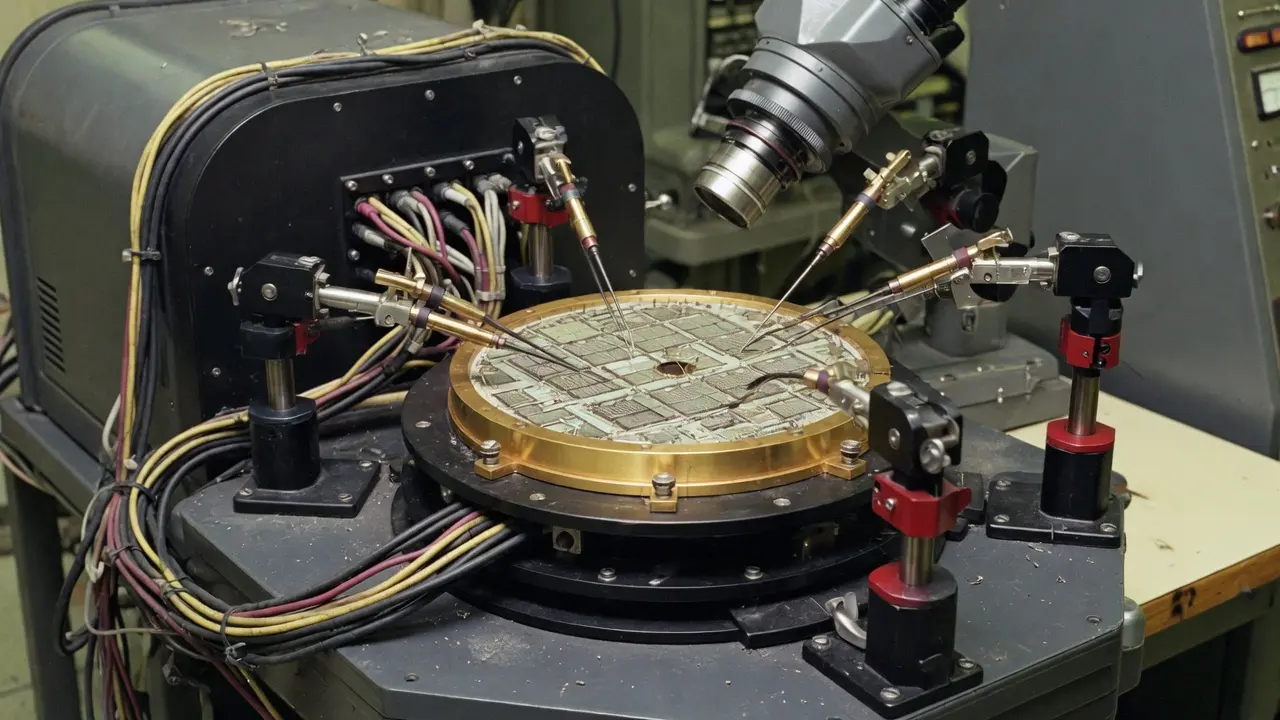
Associate Professor Giuseppe Tettamanzi, from Adelaide University’s School of Chemical Engineering, explained the historical limitations of SQUID technology, stating, “For decades, scientists have known how to make these devices identify an absolute magnetic field but doing so required design compromises that reduced their performance.” The team’s innovation centers on manipulating magnetic signal flow within the circuit; the bare loops, when positioned correctly, generate a “synthetic area spread” that effectively emulates the behavior of a diverse array of loop sizes. This allows for precise zero-field identification while maintaining the high sensitivity needed for applications like brain imaging and advanced sensing. The researchers validated their theoretical model through experimental fabrication and testing of superconducting circuits at extremely low temperatures, confirming the predicted performance characteristics.
This method represents a shift in design philosophy, prioritizing circuit architecture over component diversity. “Our work shows there is another way,” said Associate Professor Tettamanzi, emphasizing the potential to realize the full capabilities of quantum sensing technologies. The ability to extract more information from weak signals is particularly important as researchers push the boundaries of detection limits. The team believes this advance brings practical quantum-limited sensors closer to realization.
The implications extend beyond improved accuracy, potentially streamlining the manufacturing process and reducing costs by eliminating the need for complex, multi-component fabrication. The potential impact of more sensitive SQUID devices is broad, encompassing fields from medical diagnostics to communications infrastructure. According to Associate Professor Tettamanzi, “Highly sensitive superconducting quantum sensors have enormous potential in medicine, communications, industry and defence,” and “The closer we get to the fundamental quantum limit of detection, the more information we can extract from very weak signals.”
The research, detailed in Physical Review Applied, is currently the subject of an international patent application, with ongoing studies focused on further enhancing device performance and exploring novel applications for this refined quantum sensing technology.
For decades, scientists have known how to make these devices identify an absolute magnetic field but doing so required design compromises that reduced their performance.
Associate Professor Giuseppe Tettamanzi, from Adelaide University’s School of Chemical Engineering


See today’s quantum computing news on Quantum Zeitgeist for the latest breakthroughs in qubits, hardware, algorithms, and industry deals.